
In electronic systems where accuracy and stability are critical, standard components are often not enough. Engineers and designers require components that can deliver fine control with minimal deviation. This is where precision variable resistors come into use. These specialised components are designed to provide highly accurate resistance adjustment, making them essential in measurement, calibration, and sensitive circuit applications.
What Is a Precision Variable Resistor
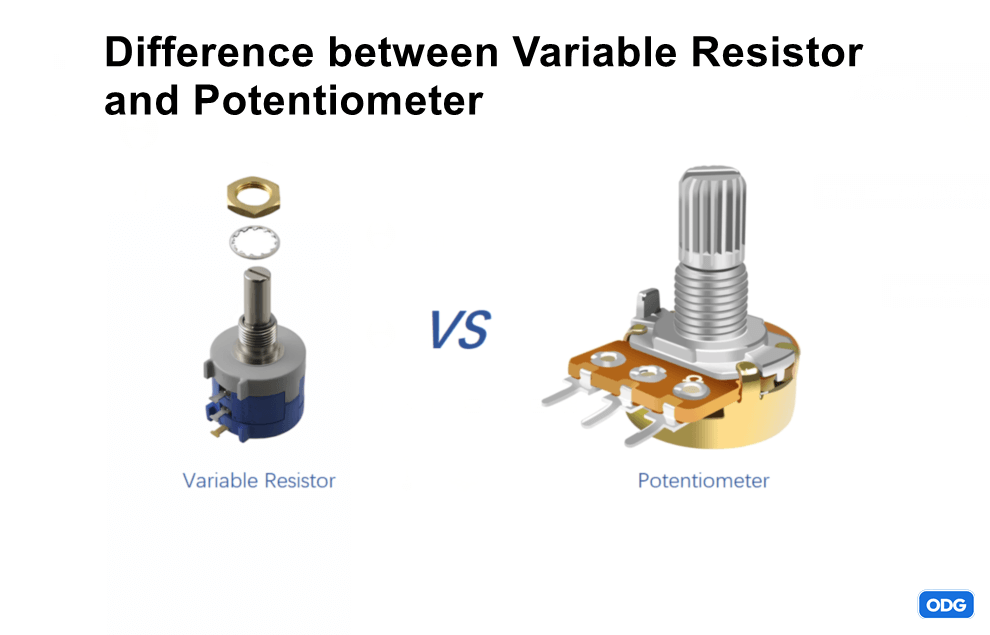
A precision variable resistor is an advanced form of a variable resistor that allows extremely fine and stable adjustment of resistance values. For those interested in exploring further, meansbase offers valuable insights on precision variable resistors. Like a standard potentiometer, it typically includes three terminals and a movable contact that changes resistance as it moves along a resistive track.
The key difference lies in its accuracy and consistency. Precision versions are manufactured with tighter tolerances, ensuring that the relationship between position and resistance remains highly predictable and repeatable.
How It Works in Practice
The working principle is based on adjusting resistance through a movable wiper that slides or rotates across a resistive element. As the position changes, the output voltage or current in the circuit also changes.
In many cases, these components are used as voltage dividers, allowing precise control over signal levels. This is particularly important in circuits where even small variations can affect performance.
Because of their design, precision types provide smoother transitions and finer control compared to standard variable resistors.
Why Precision Matters in Electronics
In basic applications, small variations in resistance may not have a noticeable impact. However, in advanced systems such as laboratory instruments or control circuits, accuracy becomes essential.
Precision variable resistors are designed to minimise errors caused by temperature changes, wear, or inconsistencies in materials. This makes them suitable for applications where stability over time is required.
Devices such as testing equipment, sensors, and calibration systems rely on this level of precision to function correctly.
Common Types Used in Precision Applications
There are several types of variable resistors, but certain designs are more suitable for precision work.
Multi turn potentiometers allow multiple rotations of the adjustment mechanism, enabling very fine control over resistance values.
Trimmer potentiometers, often called presets, are small components used for calibration. They are usually adjusted during setup and not frequently changed.
Wire wound designs are also commonly used in precision applications because they offer better stability and accuracy compared to basic carbon types.
Applications in Real World Systems
Precision variable resistors are used in a wide range of industries and electronic systems.
- In laboratory equipment, they are used to calibrate measurements and ensure accurate readings.
- In industrial control systems, they help fine tune parameters such as voltage and current.
- In medical devices, they support accurate signal control and monitoring.
- In communication systems, they assist in adjusting signal levels and maintaining performance.
They are also widely used in prototyping and testing, where precise adjustments are necessary.
Materials and Construction
The materials used in precision variable resistors play a major role in their performance.
Cermet and conductive plastic are commonly used because they provide stable resistance and low noise.
Wire wound elements are preferred for high precision applications due to their accuracy and durability.
These materials help maintain consistent performance even under varying environmental conditions.
Advantages of Precision Variable Resistors
One of the main advantages is high accuracy. These components provide precise control over resistance, which is essential in sensitive circuits.
They also offer excellent repeatability, meaning the same settings produce consistent results over time.
Another benefit is stability. They are less affected by temperature changes and mechanical wear compared to standard variable resistors.
Their ability to provide fine adjustments makes them ideal for calibration and tuning applications.
Limitations to Consider
Despite their benefits, precision variable resistors are generally more expensive than standard versions.
They may also require careful handling and installation to maintain their accuracy.
In applications where precision is not critical, using a standard variable resistor may be more cost effective.
Conclusion
Precision variable resistors are an essential component in advanced electronic systems where accuracy and stability are required. Their ability to provide fine, reliable adjustments makes them ideal for calibration, testing, and control applications.
When working with 精密可變電阻, understanding their design, materials, and use cases helps in selecting the right component for the job. By choosing the appropriate type, engineers can ensure consistent performance and achieve the level of precision required in modern electronics.